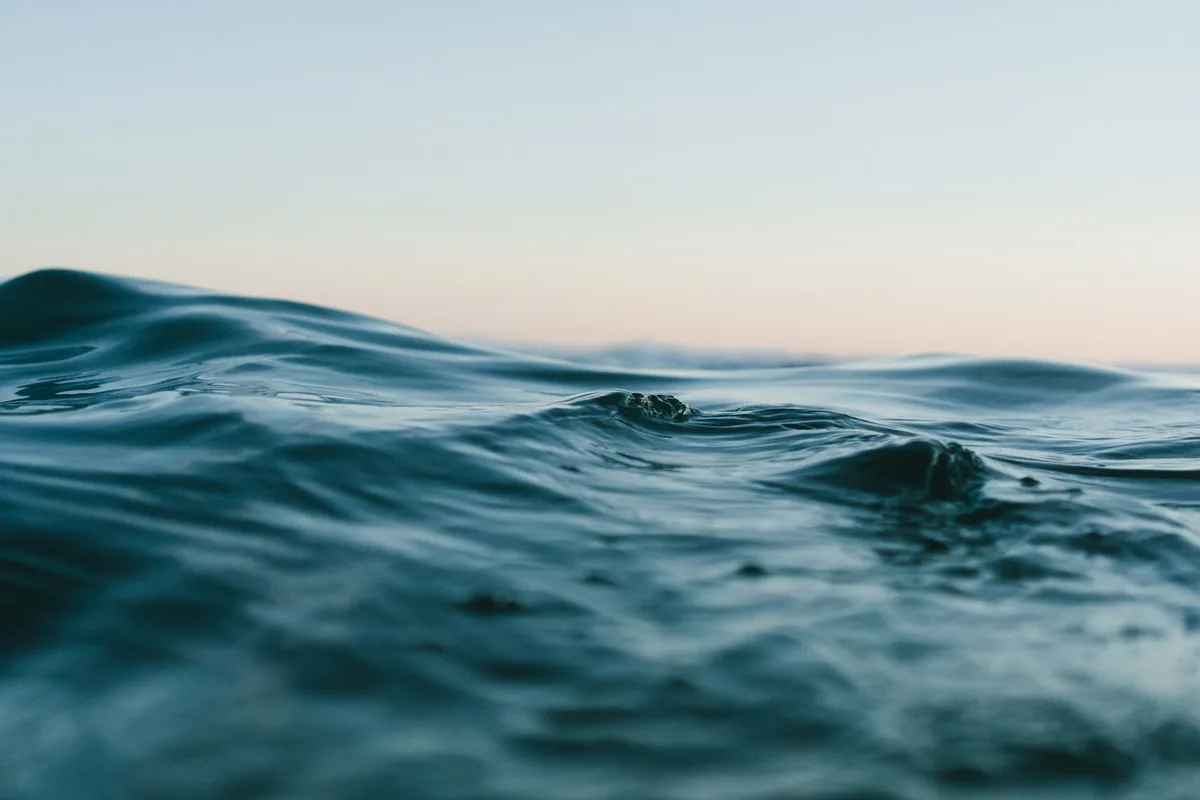
A water photograph can give the horizon a large role, a small role or no role at all. Choose the relationship you want to show rather than automatically making the widest possible frame. A low wave beneath a broad pale sky tells a different visual story from the same wave filling most of the image. Neither is inherently better; the useful comparison begins with what caught your attention.
Identify the main relationship
Ask whether you noticed the surface pattern, a line between water and sky, or the contrast between a dark foreground and a light distance. Name the subject in ordinary terms. This gives you something more concrete to compare than simply deciding that one photograph feels more scenic.
Work only from an appropriate permitted position and follow the location’s instructions. A composition choice should come from how you frame the available view, not from moving into an uncertain position to place the horizon differently. You can also compare suitable photographs you already have.
Compare a broad and a closer view
Make the first comparison simple. In one version, give the sky more space; in another, let the visible water occupy more of the frame. Keep the visual question clear enough that you can see what changed. Adjusting several unrelated elements together may leave you unsure why you preferred one version.
Look at the wave or surface detail that originally attracted you. Is it still easy to find? A wide view may provide context but make that detail insignificant. A closer frame may strengthen the texture while removing the sense of distance you wanted to preserve.
Notice what the horizon contributes
A visible horizon can give the eye a clear dividing line, but it can also become the main feature unintentionally. Review where your attention goes first and whether that matches the subject you meant to show. Do not add a dramatic explanation about the location or conditions merely to make a simple image seem more important.
The detail photo background guide considers a related relationship between subject and surroundings. With water, the sky can function as useful context or take over the frame. Decide from the actual image rather than a fixed rule about how much sky belongs in every landscape.
Choose for the intended sequence
An individual image and a travel album page may need different things. A broad water view can provide a pause after several close details; a texture-led photograph can add variety among wider scenes. The photo sequence guide can help you make that distinction.
Keep the version whose visible relationship serves the purpose you chose. You do not need to retain every near-identical attempt to prove you considered alternatives. A clear decision about water, sky and distance gives the final photograph a role that a collection of undecided variations may never find.