
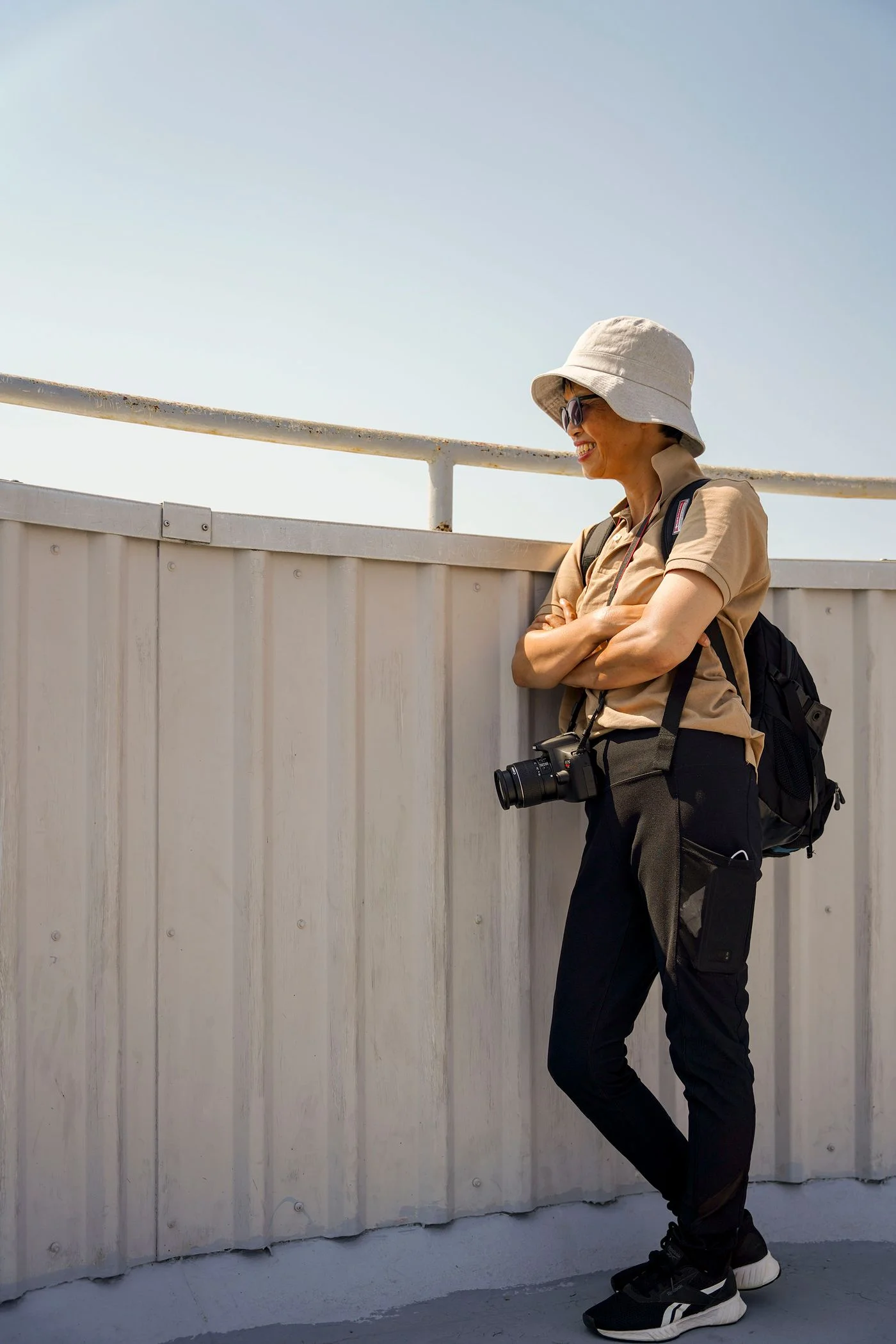
A trip can produce hundreds of photographs that all say the same thing: here is the famous building. A small story becomes more interesting when it includes context, movement, details, and the ordinary moments between major stops. You do not need more equipment or a longer shot list. You need a few different ways of looking at the day.
Choose one short outing as your starting point: a neighborhood walk, a market visit, or the journey to lunch. Keep photography within the place's rules and respect the people around you. This is a creative exercise, not a reason to enter restricted areas, interrupt work, or turn every private moment into material.
Start with the setting
Make one image that explains where the sequence takes place. It might show the street, the approach to a building, or the landscape around a stop. Look for a clear arrangement rather than trying to include everything. A useful establishing image gives later details a home in the viewer's imagination.
Check the frame's edges and background before taking several versions. Move only where it is safe and permitted, and avoid blocking the route. Small changes in position can simplify the image more effectively than adding another lens. You can use the camera or phone you already know how to handle.
Add an ordinary action
Look for something happening within the setting: a companion reading a map, your own meal being arranged with permission where needed, or another suitable moment that contributes to the story. Ask before photographing identifiable people when appropriate and respect a refusal. Do not assume public visibility removes every ethical or legal consideration.
Choose an action that belongs to the outing rather than staging every step. A candid feeling does not require secretly photographing someone. A companion who agrees to a picture can still move naturally while you wait for a clear moment. Keep the experience enjoyable for the person, not only useful for the image.
Find one specific detail
Photograph a texture, sign, object, or design feature that you genuinely noticed. The detail should connect to the wider sequence. A beautiful close-up can be pleasant, but it becomes more meaningful when the viewer understands why it belongs to this place and day.
Check rules and permissions around artworks, interiors, and other subjects. Do not assume every visible object may be photographed or published without restriction. If uncertainty remains, ask the venue or choose another subject. The creative exercise is flexible enough to continue without a particular image.
Include a transition
A doorway, path, ticket in your own hand, or another suitable link can show movement between scenes. Avoid exposing personal information, barcodes, or details that should remain private. The transition gives the sequence rhythm and can make a modest outing feel complete without relying on a dramatic final landmark.
Do not photograph while doing something that needs your full attention, such as crossing a road or managing difficult footing. Pause in a suitable place first. A travel story should come from noticing the journey, not turning the camera into another reason to rush or overlook your surroundings.
Choose an ending that feels resolved
The final image might be a quiet view, a table after lunch, or the route home. It does not need to be the best sunset of the trip. Choose something that closes the small story you began. A sequence of five different images can say more than five almost identical hero photographs.
Afterward, select one photograph for each role before editing. Remove near-duplicates and look at the order. Does the sequence make sense without a long explanation? If not, change the order or use fewer images. You do not need to force every photograph from the outing into the story.
Keep the edit honest
Adjust images in a way that suits your purpose and preserves appropriate context. Avoid captions that imply a location, access, or experience the photograph does not establish. If an image is a posed moment, there is no need to invent a spontaneous discovery around it. Clear simple captions can connect the sequence without exaggeration.
How many images make a story? Use enough distinct views to convey the outing; a small sequence is a useful start. Must every photograph include people? No; setting, objects, and transitions can carry the narrative. Can I do this with a phone? Yes, using the device appropriately and concentrating on observation and selection.
Our phone travel-photography guide offers a smaller equipment approach. The camera day-bag guide helps if you choose a dedicated camera. A good photo story makes the ordinary connections visible, not merely the famous destination recognizable.


