
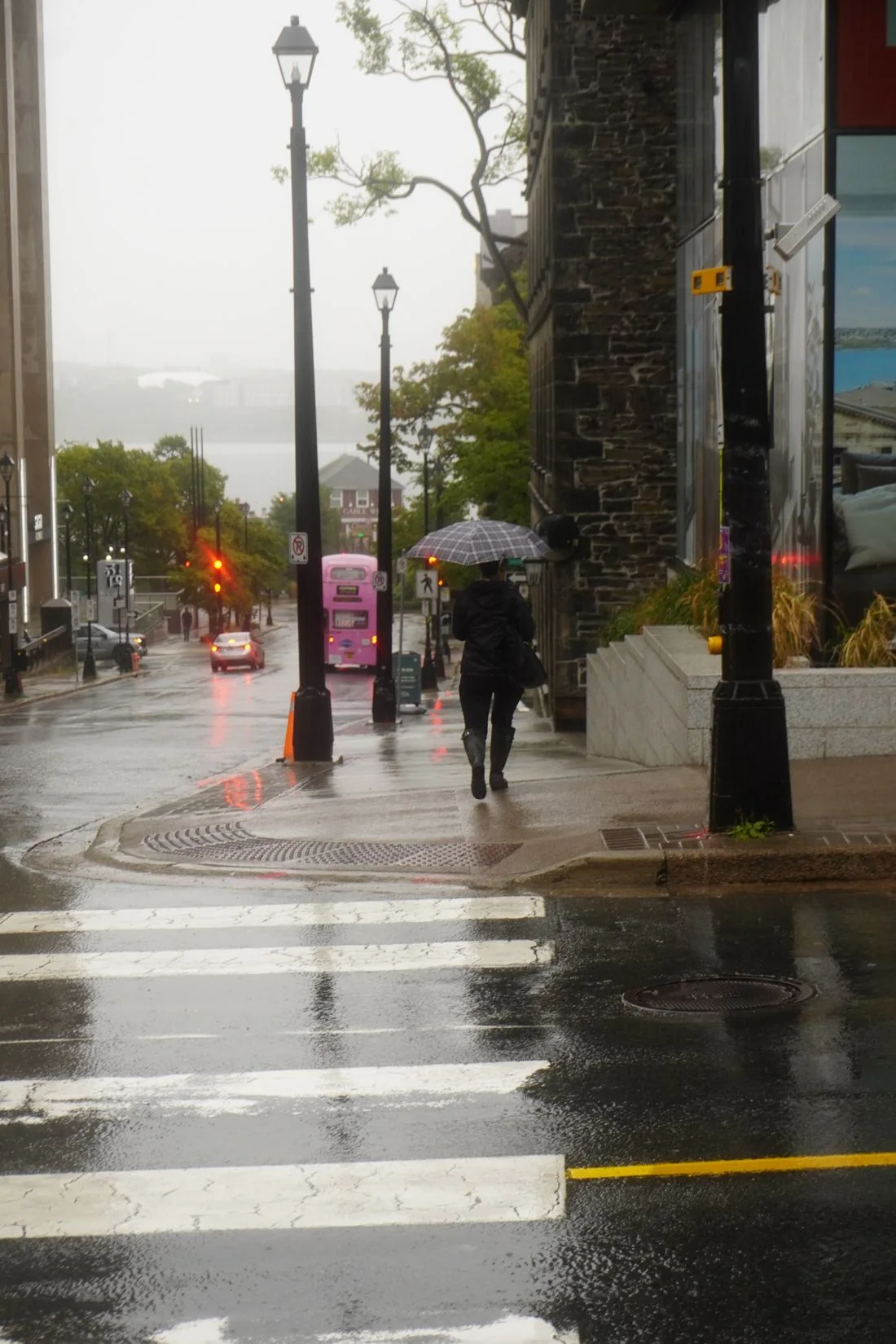
Rain can give a familiar street reflections, softer light, and a different pace. It can also make equipment handling awkward and turn a long photography plan into an uncomfortable outing. A short route with suitable shelter lets you respond to conditions without treating every wet surface as an invitation to keep shooting.
Begin with the forecast, local conditions, and the camera or phone maker's guidance. Weather protection claims have limits and differ by product. This article does not establish that any device is safe in rain. If conditions exceed your equipment's limits or your comfort, choose another plan. The photographs are optional.
Keep the route compact
Choose one small area with realistic opportunities to pause indoors where permitted. Check current opening and access information for any venue you intend to use. Shelter should not depend on occupying a private doorway or assuming a café welcomes someone who only wants a dry camera position.
Plan a clear way back and avoid a route that becomes difficult in the conditions. Pay attention to footing, traffic, and local warnings. Do not step into roads, waterways, or restricted areas for a reflection. A safe ordinary viewpoint is a better starting point than a dramatic image that requires ignoring the setting.
Choose a small equipment set
Take only what you can handle appropriately under the conditions. Changing lenses or opening compartments may be more complicated in wet weather. A familiar simple setup can keep attention on the scene and the surroundings. Your phone may be more convenient for some outings, but its own limits still need to be understood.
Use protective accessories only as intended and verify compatibility. A cover or bag does not automatically make every arrangement suitable for prolonged rain. Keep necessary protection accessible before conditions change. Avoid burying it beneath the equipment it is meant to protect.
Look for a clear visual idea
Choose one theme, such as reflected shapes, a line of umbrellas, or the contrast between a sheltered interior and the street. Follow venue rules and respect people when photographing. A focused idea can produce a small coherent set without requiring you to walk farther merely to find more subjects.
Check the frame for distracting edges and personal information before taking several versions. Move only where it is appropriate and safe. A subtle change in angle can clarify a reflection, but do not rely on constant device handling while walking. Pause, compose, and then put the equipment away appropriately.
Keep hands and carrying simple
Think about how you will manage the bag, outer layer, and any umbrella. If the arrangement leaves no practical way to control belongings or move comfortably, simplify it. You may prefer to photograph from a suitable sheltered position or wait for a lighter interval. There is no requirement to keep the camera out throughout the walk.
Choose footwear and clothing for the actual conditions and route. Use familiar items you can move in and manage while carrying the bag. Loose accessories and trailing hems can create another task when wet. The outfit should help you concentrate on the place rather than continually fixing the layers.
End with appropriate care
When returning, follow the equipment maker's care instructions and handle wet bags or covers appropriately. Keep moisture away from items that need to remain dry. Do not improvise heat or cleaning treatments without verified guidance. If you suspect damage, consult suitable support rather than continuing to use the device experimentally.
Select a few images after the equipment has been attended to. Notice whether the short route provided enough variety and what made handling difficult. That information can improve the next outing more than another weather accessory purchased without a clear problem to solve.
Do I need a weather-sealed camera? Assess the actual product's documented limits and the conditions; no label answers every situation. Can an umbrella solve the problem? It may help in some arrangements but can also complicate handling. What if the rain becomes heavy? End or change the outing rather than treating the original route as a commitment.
Our rainy London weekend guide offers a broader flexible-trip approach. The camera day-bag guide helps with accessible protection and carrying. A rainy photo walk succeeds when the route stays enjoyable and the equipment remains within appropriate use.


