A short winter trip can fill a suitcase faster than a longer summer holiday. A thick jumper takes the space of several lighter pieces, and a second pair of boots can seem sensible until it has displaced everything else. The useful question is not how to squeeze harder. It is which combination of clothes covers the actual weekend without making every change of plan require another outfit.
Imagine arriving on Friday evening, spending Saturday mostly on foot and returning on Sunday after lunch. There may be one restaurant booking and a room that is smaller than your bedroom. Build the bag around that sequence, then leave a little breathing room for the journey home.
Choose the outer layer first
Your coat is likely to appear in most outdoor moments, so start there. Try it over the layers you intend to pack and with the bag you will carry. An attractive jumper that bunches beneath the sleeves is less useful than a thinner familiar layer that lets you move comfortably. Check the pockets too: they can hold a pair of gloves while you enter a café, but should not become a second unsearchable day bag.
Wear the bulky outer layer on the journey when that suits the conditions and your comfort. Still allow for the moment when you take it off. A coat balanced on top of a fully expanded suitcase can be awkward at a station or while looking for a room key. Leave a practical carrying option rather than assuming it will stay on all weekend.
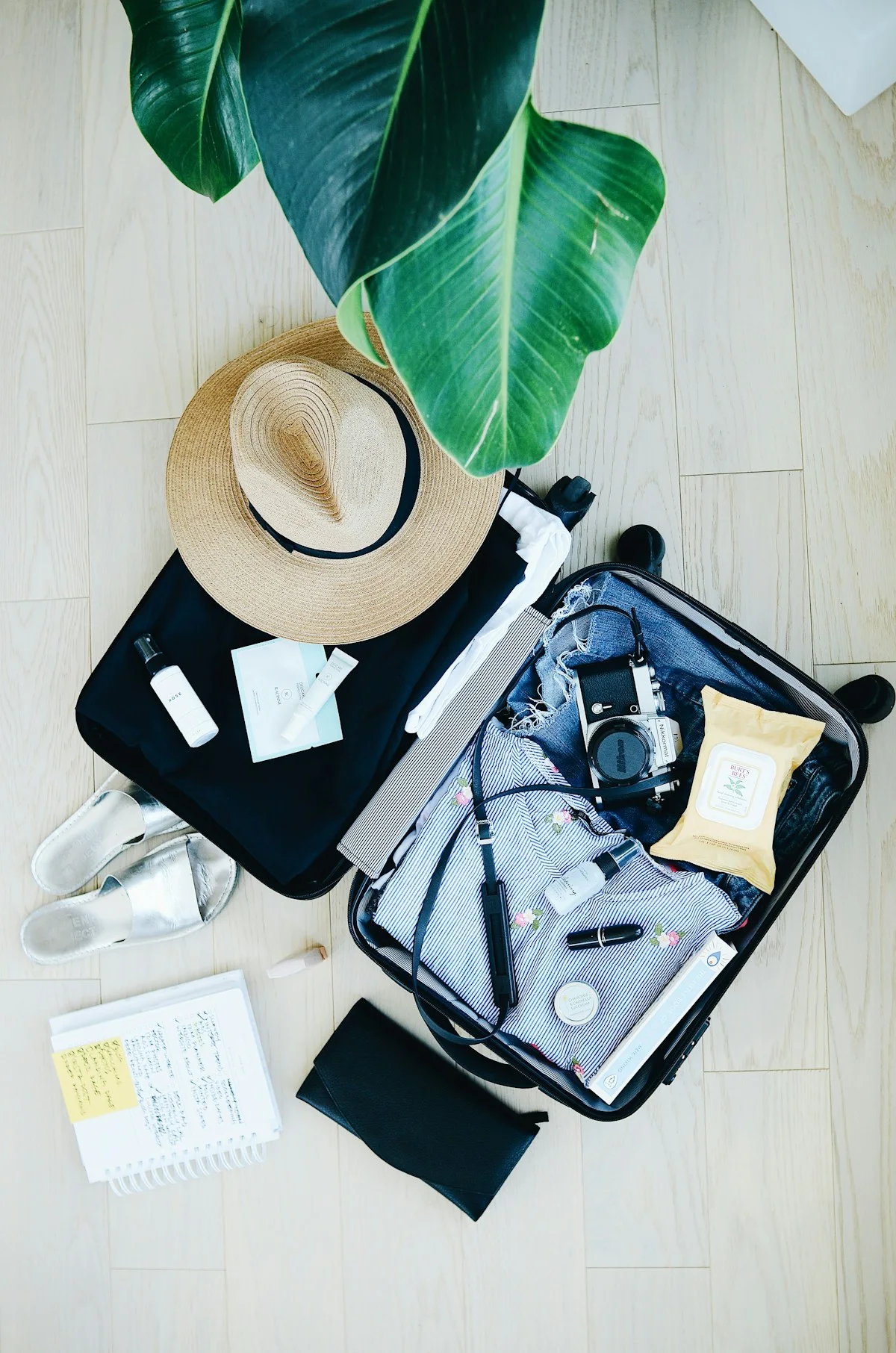
Make two outfits share most of their parts
Lay out a walking outfit and an evening outfit together. Look for the pieces that can remain: trousers, a simple base layer or shoes suitable for the particular dinner. A fresh top or different accessory may provide all the change you want. This is not a rule against dressing up; it is a way to identify which items create a useful difference and which merely duplicate the first outfit.
Try sitting down, reaching for your bag and putting the coat back on. Winter layers need to work as a group rather than as a row of attractive individual items. If the evening plan requires a genuinely different pair of shoes, give that pair a clear place in the bag and remove something else. Do not let the extra footwear become an invisible addition to an already finished list.
Draw a realistic laundry boundary
For two nights, you may prefer to bring the small essentials you need and leave washing for home. That can be simpler than carrying detergent, finding somewhere to dry clothing and packing damp fabric before checkout. If a longer journey surrounds the weekend, make the laundry decision for the whole itinerary instead. A room with limited hanging space is not automatically a convenient laundry stop.
Keep worn clothing in a separate washable pouch or another suitable container you already own. The aim is separation, not compression at any cost. Let items air appropriately when possible, follow their care labels and keep damp contents away from the rest of the bag. Our packing guides offer more ways to organize a small load without purchasing a separate organizer for every category.
Give the room a simple unpacking routine
On arrival, remove the things that need space: the coat, the outfit for the next morning and anything damp from the journey. Keep the remainder together so that a brief stay does not spread across every drawer. Decide where the empty day bag will live and where the shoes can sit without becoming something to step around in the dark.
- Put tomorrow's clothes together before dinner.
- Keep the return-journey essentials accessible.
- Separate worn items as you change rather than sorting everything at checkout.
- Check the bathroom and charging area before closing the bag.
This matters particularly when two people share a small room. Agree on the limited hanging and surface space instead of unpacking competitively. See the hotel planning collection for room details that can make a short stay easier.
Use the final empty space as a decision tool
Close the packed bag, lift it and open it again without completely emptying it. If retrieving one top requires rebuilding the whole suitcase, the load is not yet comfortable. Remove the least useful duplicate rather than buying a larger organizer to solve a volume problem. Leave space for a folded layer when the journey becomes warmer and for the ordinary disorder of used clothes.
Does one bag mean only one outfit?
No. It means choosing combinations deliberately. A small number of compatible pieces can cover several moments while a larger collection of incompatible ones may still leave you unsure what to wear.
What should be the first thing to leave behind?
Look at the item assigned only to an uncertain extra event. If the weekend does not happen to include that event, it has travelled for no clear reason.