
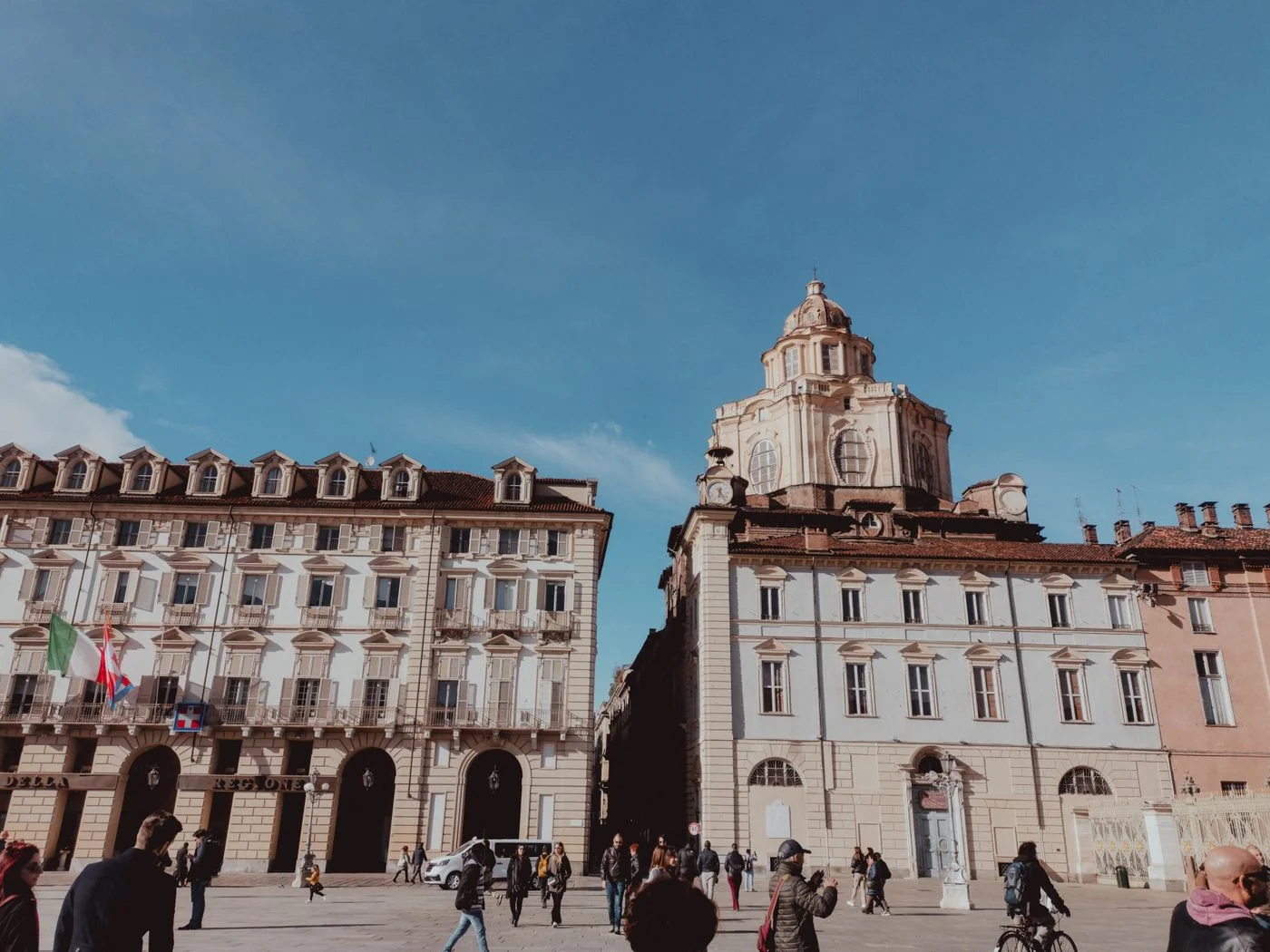
Turin's architecture can give a city walk a quiet collecting game: notice a small set of details and record why they caught your attention. Choose arches, doorways, columns, or another visible relationship rather than treating every building as a landmark to identify. A modest detail collection can make a familiar route feel worth looking at twice.
Choose one kind of detail
Select a feature that interests you and can be observed from permitted public space. Keep the choice flexible. You are making personal visual notes, not an authoritative architectural inventory or a claim to identify the age of every façade.
Use official tourism resources for orientation around central squares and arcaded streets. Check the actual route and access for your visit. A description of an area does not grant entry into private courtyards or buildings.
Keep the collection small
Aim for a few different examples that show variation. The useful distinction might be shape, proportion, light, or the way a feature frames the street. Avoid repeatedly photographing nearly identical details just to increase the total.
Write a short note about each selected example if that helps. Record the location accurately without collecting unnecessary private information. If you do not know the building's name or history, leave that uncertainty visible rather than inventing a confident caption.
Use the camera within the street
Choose a suitable position and keep the pedestrian route clear. Avoid standing in traffic or crossing into an unsuitable place to obtain symmetry. A slightly different frame is preferable to a photograph that depends on ignoring the shared space.
If using equipment beyond an ordinary handheld setup, check relevant current rules and permissions. Do not assume every arcade or covered area is open to the same activities. Respect businesses and people using entrances.
Plan one comfortable pause
Connect the route with a wanted café or meal using current provider information. The pause can be a time to compare notes, not a reason to occupy a table indefinitely without arrangement. Keep the camera and belongings appropriately secure.
Choose a short route that leaves room for this attention. A detail walk often works best when you are not also racing toward several timed visits. Give a booked museum its own clear place in the day if one is included.
Caption the finished selection honestly
Separate what you observed from researched facts. Verify any historical or technical statement through suitable primary information before sharing it as fact. A caption can simply describe the visible feature and your interest without adding an unsupported story.
Must I know architectural terms? Ordinary accurate descriptions are useful. Should I photograph every example? Choose a varied small group. Can I enter a courtyard for a better view? Confirm permission and access first.
Our phone-photography guide supports familiar equipment. The photo-story guide helps edit the collection afterward.
Planning references: Official visitor planning. Confirm current arrangements with the relevant provider.


