
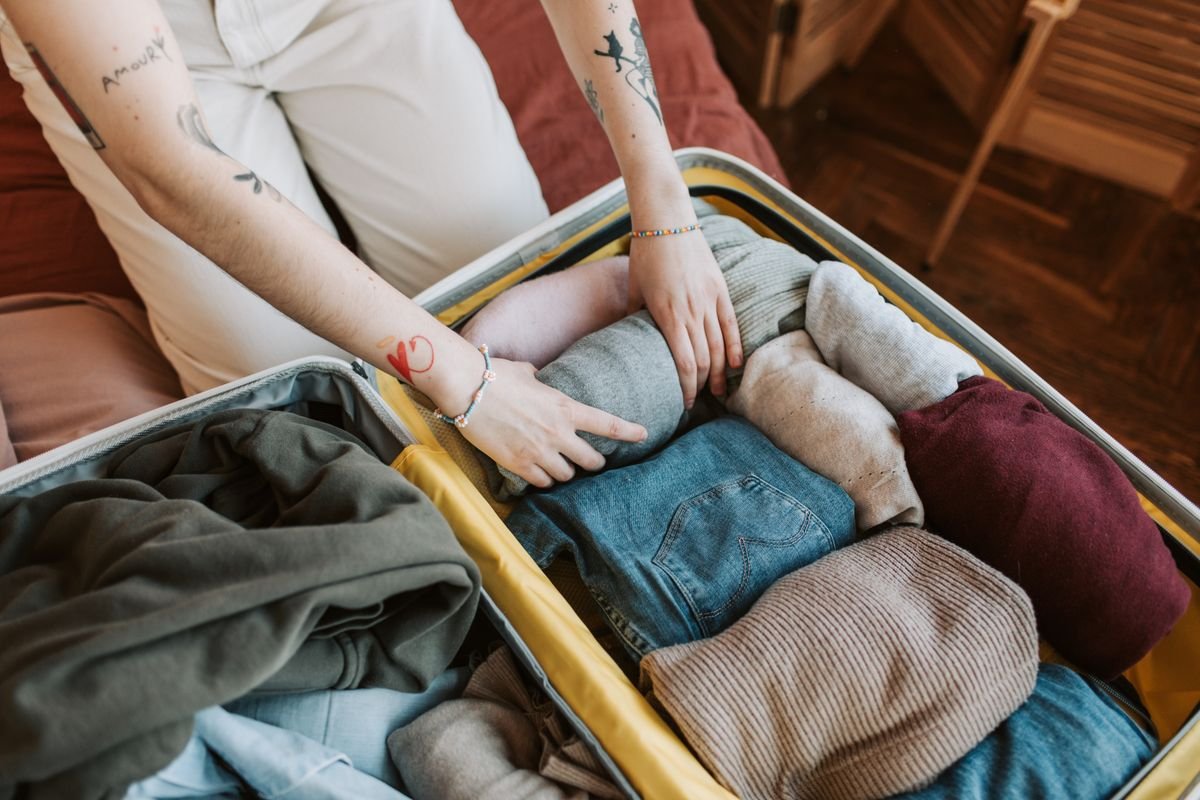
Two travellers can each pack carefully and still arrive with duplicate shared items or an important gap. The problem is often ownership of the task rather than the size of either bag. Assign shared belongings before packing finishes, then keep that assignment visible when the plan changes.
Separate personal and shared items
Begin with two lists: what each person manages personally, and what both expect to use. A product is not automatically shared because it sits in a bathroom or appears useful to a couple. Ask about preferences and requirements before assuming one traveller's item can replace the other's.
Keep private documents, individual care products and other personal requirements under the relevant person's control. This is a conversation about agreed shared packing, not an invitation to sort someone else's belongings or remove an item from their list without asking.
Give each shared item an owner
Write the actual object and the person responsible for bringing it. Replace vague entries such as chargers with an identified kit when that matters. The owner checks the item, packs it in a suitable place and confirms that the task is done. Both travellers should know where it will be carried.
The charging-cable record helps identify compatible parts without relying on appearance. Do not assume a cable can serve both devices until the relevant information supports that use. An unresolved technical question belongs on the decision list, not under a tick marked packed.
Discuss the split journey
Consider whether the travellers will remain together for every part of the trip. An item agreed as shared may not be available when one person leaves for a different activity. Talk through the actual day rather than packing a duplicate automatically or discovering the conflict at the hotel door.
Keep any necessary backup decision proportionate to the item's purpose and your circumstances. The useful question is what happens when the shared object is with the other person, not whether every category should have an identical spare.
Confirm changes before closing the bags
Use a short read-through: object, owner and carrying place. If the item changes bags, update the note and tell the other traveller. The interrupted-packing guide supports finishing the session; this shared-item check deals specifically with assumptions made between two otherwise organised lists.
Keep the record simple enough to consult on arrival and before the return journey. If a shared object is borrowed during the stay, agree its return to the owner's chosen suitable place. At home, discuss an actual duplication or gap before revising the next list. A shared packing plan works when responsibility and access are clear, leaving both people free to manage their own belongings without repeatedly asking who was supposed to bring the same object.


