A train photograph can be an interesting part of a travel account without being evidence of a journey someone can book. Keep the image’s subject distinct from claims about the railway service. A locomotive, a stretch of track or a familiar-looking carriage does not by itself establish the operator, route or passenger arrangement. Describe what you know and give unresolved details the space to remain unresolved.
Identify the purpose of the image
Decide whether you are sharing an observation, illustrating an interest in railways or documenting a particular journey you actually made. These roles call for different context. An illustrative image should not quietly become a photograph of a service you did not use.
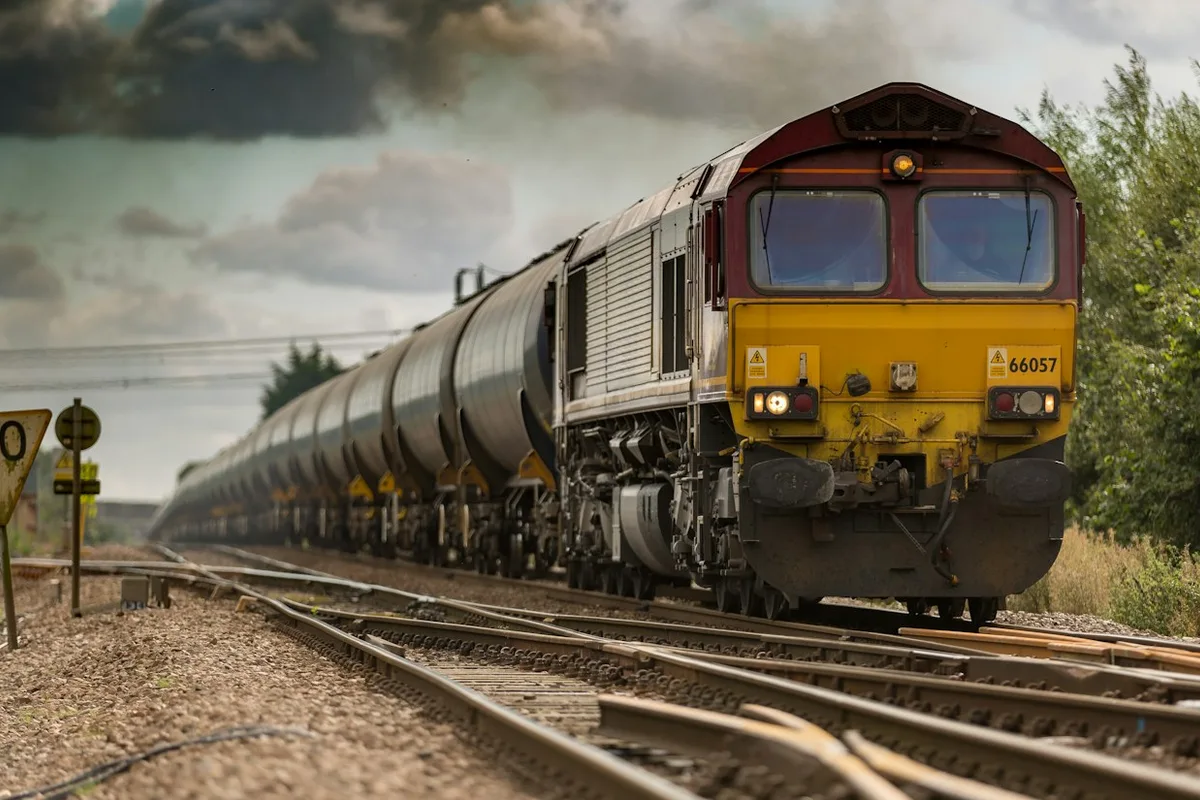
If the train pictured is established as a freight train, keep that description rather than using it to imply a passenger experience. Likewise, do not assign a specific model name from a superficial resemblance. An ordinary visual description is better than a precise label you cannot support.
Separate visible details from identification
You can describe the colour of the front, the track’s direction within the frame and the surrounding landscape. Those observations do not require an invented story about where the train has come from. A visible marking may provide a question to research, but it is not an invitation to guess the rest.
Keep a private source note if you have reliable information about the image. Record where the identification came from rather than allowing it to become detached from its evidence. For a photograph supplied by another creator, preserve the established source and credit information as part of the image’s record.
Do not turn atmosphere into an itinerary
A scenic railway image may inspire a future trip. Plan that trip through the actual operator’s current information, including the particular service and booking requirements. The photograph cannot confirm a stop, a seat view or access to the place from which it was made.
The scenic train seat guide deals with a real planning choice. Keep that task distinct from choosing an appealing illustration for a notebook or article. Inspiration can begin the research without supplying its answers.
Caption the known relationship
If the image is simply an illustrative railway scene, say so clearly where needed. If it records your own journey, use the established journey context without claiming details the photograph cannot prove. A caption should help the reader understand why the image belongs, not disguise uncertainty with a technical-sounding description.
The facts and impressions note guide offers a broader framework for the same distinction. Follow railway and location instructions whenever making photographs, and do not seek access to restricted areas for a better view. An honest account of the image you can appropriately use is more valuable than a dramatic service story attached to the wrong train.