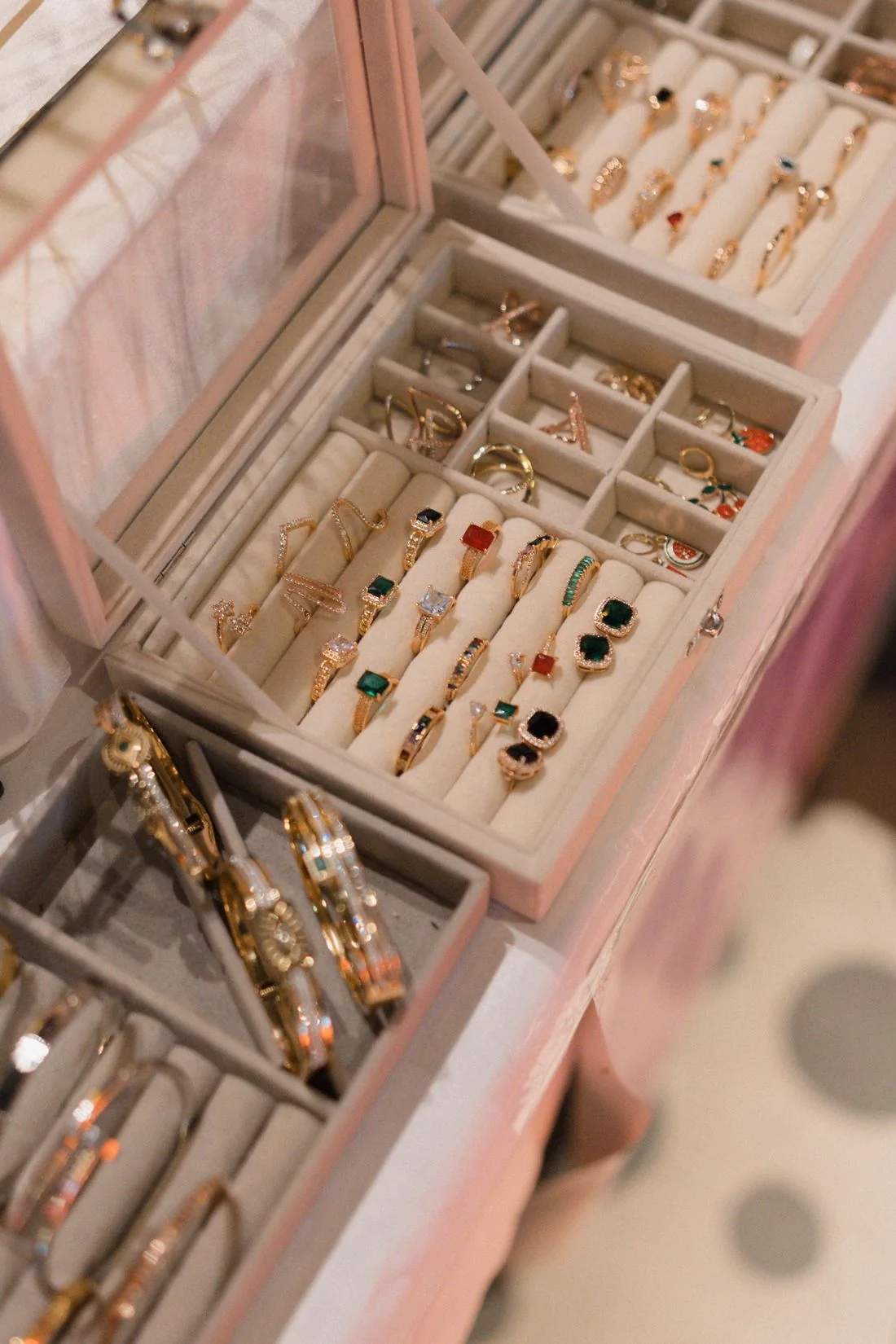
A jewellery packing count needs a stated unit. “Three items” can mean three individual pieces, three pairs or three containers, and those descriptions do not necessarily refer to the same selection. Write the count so you can interpret it without remembering what the word item meant when you made the note. The useful task is a small piece-count reconciliation, not a general guide to choosing, protecting or valuing jewellery.
Decide what the count measures
Use individual wearable pieces as the main counting unit if that serves your record. Keep container counts on a separate line. One box is not one piece of jewellery, and one labelled set is not automatically one object. State the convention at the top of the note so it remains clear later.
Do not dismantle an object to increase the detail of the count. Where an item’s actual instructions identify separate associated components, record those appropriately and separately. The notation describes the existing selection; it does not supply handling instructions or redefine how a product should be used.
Translate a sample selection into explicit lines
Consider a hypothetical selection of one pair of earrings, one necklace and three rings. If the pair consists of two earrings, the main wearable-piece count is six: two earrings, one necklace and three rings. The selection might occupy one case, but that case count answers a different question.
Write the pair as “earrings: two” rather than silently switching between one pair and two pieces in different parts of the note. Keep any associated components identified by their actual product information outside that main example unless the record explicitly states another convention. An unexplained change in counting unit can create an apparent discrepancy even when no selection has changed.
Give a changed selection its own arithmetic
Suppose you remove one ring from that example before packing. Change both the ring line and the total: two earrings, one necklace and two rings now make five wearable pieces. Do not leave the total at six and expect a crossed-out word elsewhere to explain it later.
If you exchange the necklace for another necklace, the total remains five but the object reference changes. A count can agree while the selection differs. Use enough plain description to distinguish the actual pieces without making unsupported claims about their materials or value.
Reconcile the note when a task resumes
An interruption can leave a partly updated list. Mark the record unfinished until the component lines and the total agree with the actual selection. The packing interruption guide helps make that pause explicit instead of relying on memory about which line you had checked.
Keep the pieces in their appropriate established travelling arrangement, following their own information. The glasses case routine offers an analogy for a named location, but a case is not evidence that every counted piece is inside it. Compare the real contents with the explicit lines when checking the selection. A clear unit, an understood total and a visibly updated change are what make the small packing note interpretable.