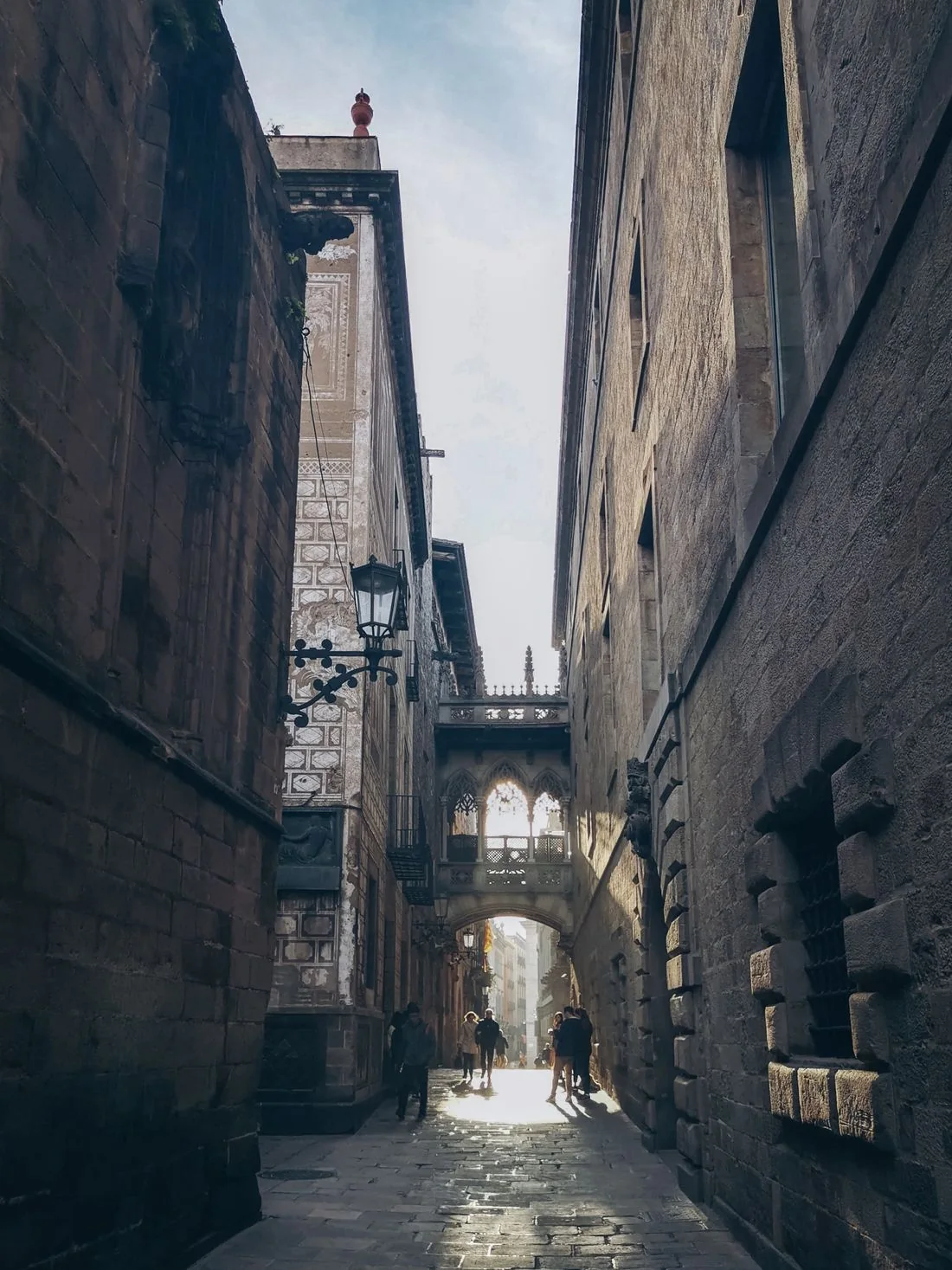
An architectural opening can give a travel photograph a deliberate boundary: an arch around a street view, a public passage framing another building or a gap that reveals a small part of the scene beyond. Decide what the opening contributes before stepping closer. The frame should help explain your view, not become a reason to enter a place you are not permitted to use.
Choose the view before the frame
Look at the scene beyond the opening and name what interests you. It might be the relationship between a narrow passage and a broader street, a patch of light or the contrast between two surfaces. A decorative edge alone does not necessarily give the photograph a subject.
Make a mental comparison with the view without that boundary. If the opening helps the image communicate the space you noticed, keep it. If it merely hides an important detail, another appropriate viewpoint may serve the subject more clearly.
Stay within permitted public space
Follow signs, barriers, property instructions and the actual conditions. An attractive doorway may be someone's ordinary entrance rather than an available photographic position. Do not treat an image made by another traveller as permission to reproduce its location or pose.
Keep access clear for people using the space. Wait or choose another view when your position would obstruct movement. A small change in the photograph is easier to accept than expecting residents, staff or other visitors to work around a composition you have decided must happen.
Check the edges deliberately
Look at what the opening includes and cuts off. A narrow dark strip, an uneven edge or a distracting sign may become more noticeable in the image than it felt while you were looking at the wider place. Choose whether those details support the story rather than removing every irregularity automatically.
The travel detail background guide helps separate subject from surrounding information. Here the architectural edge is part of that surrounding information, so it deserves a deliberate role instead of being assumed useful because it forms a shape.
Keep people part of the decision
Notice whether the framing makes a person inside or beyond the opening the unintended subject. A view that looked architectural may become a portrait once a face occupies its centre. Follow appropriate permissions and choose another moment or composition when needed.
The portrait permission guide supports that separate conversation. An architectural interest does not erase the people whose ordinary activities happen to occupy the same space.
Compare a modest pair of images
If conditions permit, make one wider version and one using the opening more prominently. Review which better communicates the relationship you intended. You do not need a long sequence of small adjustments while companions wait or a shared passage remains obstructed.
Caption the location only as precisely as you can establish. A personal observation about framing does not require an unverified architectural date or style label. The useful result is a photograph whose boundary feels intentional and whose making respected the place that supplied it.