
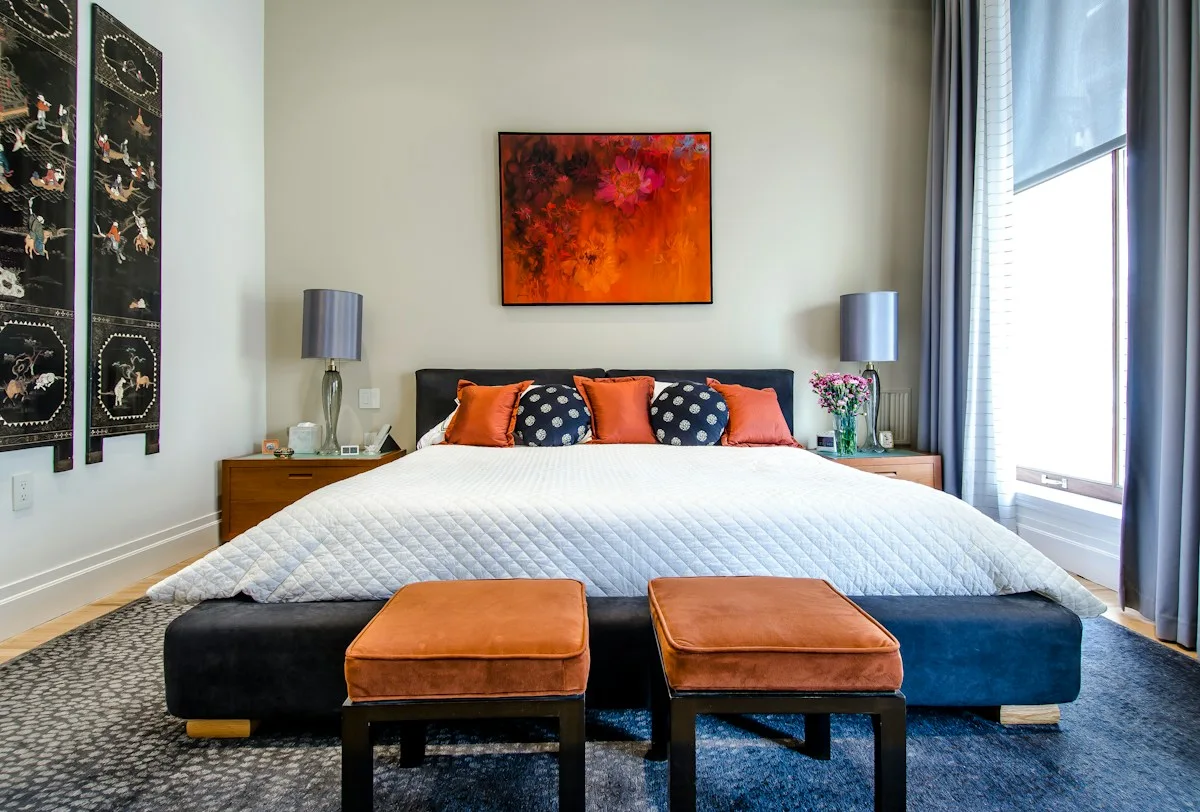
A shared room should be compared through each traveller's approach to the bed, not only through a photograph of the bedding. Two people may use the room differently, and an arrangement that suits one arrival routine can make the other person's movement awkward. Discuss those ordinary needs before choosing between attractive room images.
Describe the travellers' actual requirements
Ask each person what matters when getting into and out of bed or moving around the room. Keep individual needs with the person who understands them. Do not infer accessibility from a wide-angle photograph or a general room label; use the property's accurate information and appropriate advice for important requirements.
The hotel location or room size guide helps compare where additional space would serve the trip. A larger room is not automatically the answer if its layout still fails a specific approach or movement requirement.
Look beyond the visible floor strip
Read the room image as an occupied layout: mark each bed approach, the door swing, the place where luggage is expected to stand and any chair that will actually be used. Then ask the property about the uncertain section. “Does this room type have access to both sides of the bed?” is a more answerable inquiry than “Is the room spacious?” Do not infer an access guarantee from the photograph.
Keep exits and ordinary movement clear during the stay. Do not move unfamiliar heavy furniture or modify fittings to manufacture a different layout. If the allocated room does not meet an important agreed requirement, ask staff about appropriate options instead of relying on an improvised workaround.
Include different daily rhythms
Talk through an early departure before booking. Which person will need clothes, a bag and the route to the bathroom while the other remains in bed? Identify the actual retrieval path rather than assigning a side of the bed by habit. If one approach must stay clear for a personal requirement, make that requirement explicit in the property inquiry.
Do not turn this discussion into a promise that one room arrangement will prevent every disturbance. The practical aim is a clear shared plan and relevant information, with both travellers able to explain what they need rather than discovering incompatible assumptions after arrival.
Plan the belongings as part of the layout
Choose suitable places for the actual bags and outer layers according to their requirements and the property's guidance. A bench or spare chair may have another intended use, so avoid assigning every object to the same corner. Check the occupied arrangement together once the luggage is settled.
Before another booking, record the specific feature that helped or caused a problem. A note about one person's approach to a bed is more useful than a vague rating of room spaciousness. That information supports a better inquiry next time while keeping the decision grounded in the travellers' real routines, rather than in the apparent symmetry of a hotel photograph.


