
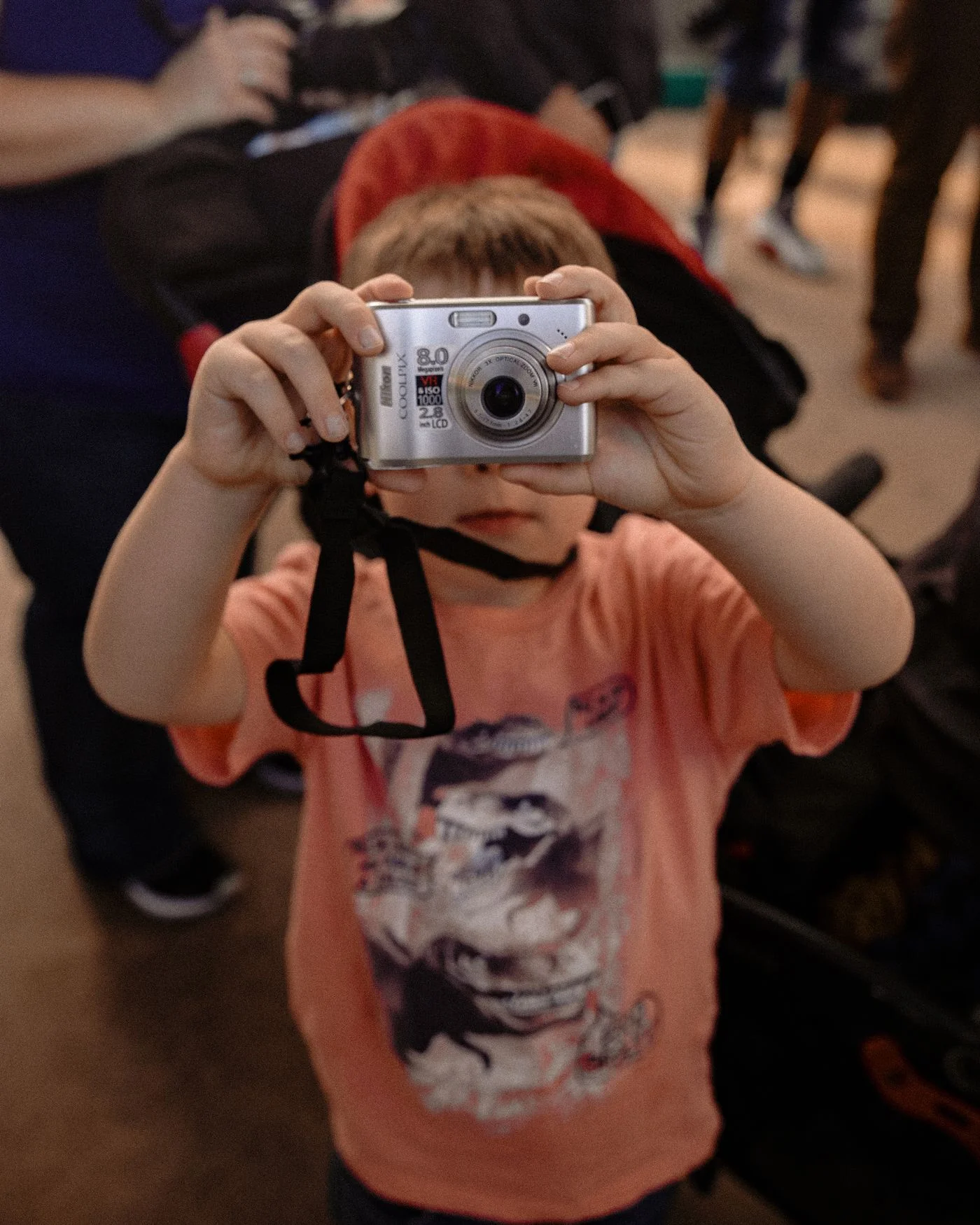
Handing a camera to a companion is easier when both people understand the task before the device changes hands. The owner may expect a simple photograph while the other person is unsure which control to use. A clear handover can reduce that uncertainty without turning a short shared moment into an improvised lesson on every camera setting.
Agree on the photograph first
Ask whether the companion wants to help and explain the intended subject. Keep the request specific: a view of the group in this permitted place, or an object already chosen for the frame. Do not assume accepting the camera means the person wants responsibility for a complex sequence or an unfamiliar technique.
The travel portraits with permission guide addresses the subject's participation. A camera handover adds another agreement: the person operating the equipment should also understand and accept what they are being asked to do.
Let the owner prepare the device
The owner should choose the appropriate setup and explain only the relevant controls using the product's actual information. Do not ask another person to find an unknown setting by experiment or alter equipment they do not understand. A short demonstration can be clearer than a stream of button names delivered after the camera has already been passed over.
Keep the device's own handling requirements central. The owner should decide whether the intended use and location are appropriate and how any supplied carrying fittings should be managed. An attractive view is not a reason to hurry an unfamiliar handover in an unsuitable place.
Pass the task back in words
Ask the companion whether the explanation is clear and give them room to decline. They might repeat the simple sequence in their own words or ask which control starts the photograph. Resolve that small uncertainty before the owner moves into position instead of leaving the operator to guess under pressure.
The camera day-bag guide offers related questions about the owner's wider kit. Keep loose accessories and unrelated equipment managed by the owner so the helper receives a defined task rather than a collection of parts to hold.
Make the return equally clear
Finish in an appropriate place and let the owner take responsibility for the camera again. Review the result together if both want to, without treating the helper's effort as a performance test. A missing detail can be explained kindly if another photograph is wanted and the setting still permits it.
Avoid changing someone else's device settings or keeping the camera while moving to another location without agreement. If the process felt awkward, note whether the difficulty was the explanation, the task or the place. A better next handover may simply involve a clearer request or a different willing operator. The useful outcome is shared understanding around the photograph, with the owner's control of the equipment preserved throughout.


