
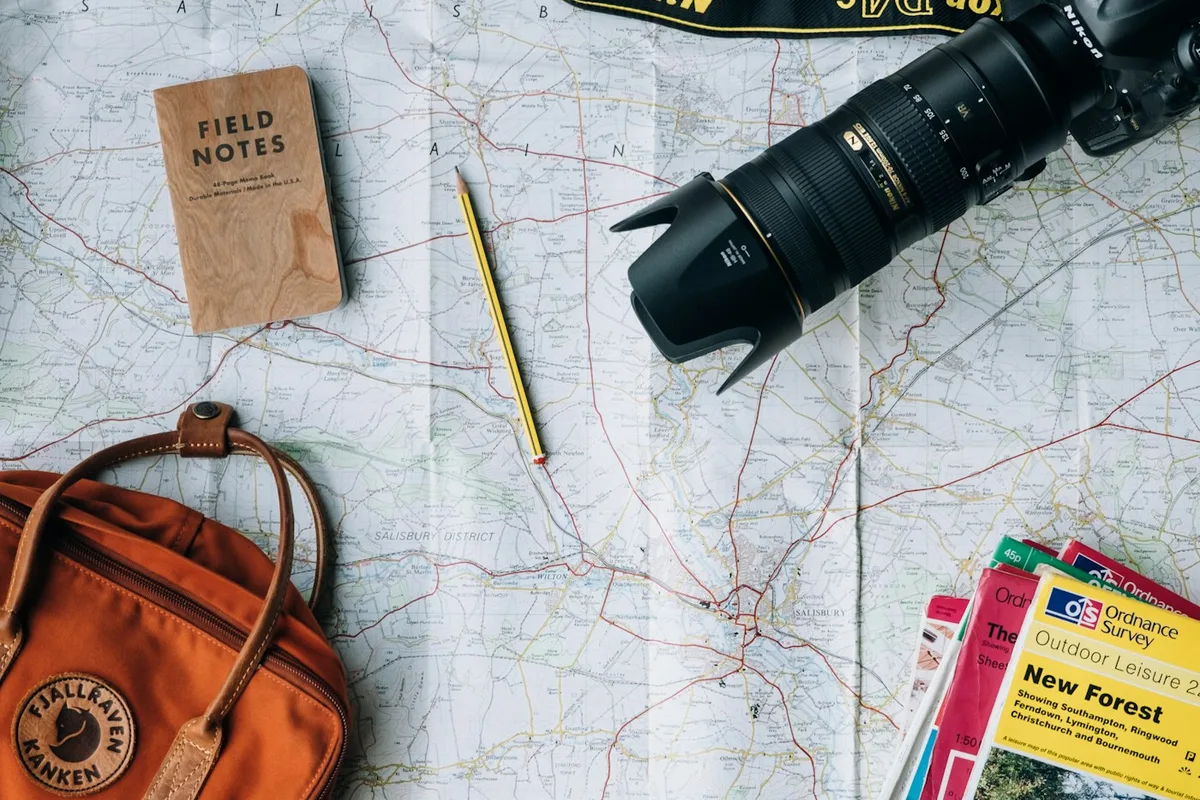
A paper map's boundary matters before it becomes the basis of a walking plan. A clearly printed area can still omit the approach, return point or nearby district the traveller expects to use. Check the map's stated coverage and purpose before assuming the whole day is represented on the sheet.
Identify the map accurately
Read the publisher's information about the area, edition and intended use. Do not describe a map as current or comprehensive without checking what the publisher actually states. A decorative illustration and a practical reference can share a familiar place name while answering different questions.
Keep the original identification available if the map was received as a gift or removed from a larger publication. A folded sheet without its title or context can become difficult to assess later, especially when several maps cover similar areas at different scales.
Find the whole intended route
Find three points before highlighting any sights: where you arrive, the area you want to explore and where the outing ends. Check whether all appear on the sheet. If a point lies beyond the printed edge, record the missing segment explicitly and obtain a suitable reference for it rather than drawing a speculative connection through the margin.
The weather-flexible day-trip guide helps keep the plan adaptable. A map can support broad orientation while the actual day's conditions and reliable local information still influence what is appropriate to attempt.
Keep changing details separate
Check current official information for matters such as access, transport or a specific site's requirements when those affect the plan. A printed route does not establish today's availability or suitability for every traveller. Leave individual access decisions with accurate information and the person who understands their own needs.
Avoid treating a visually short line on the page as a complete description of the effort involved. The map's scale and symbols need to be understood, and important uncertainty should be resolved before relying on the plan. Choose a more suitable reference or another outing when the available information does not answer the relevant questions.
Make notes without losing the source
Keep a compact route key beside the map: confirmed start, confirmed return destination and the reference needed for any segment outside the sheet. Add personal ideas in a separate colour or note if that suits the product. A café suggestion should not look like an official route instruction, and a publisher’s boundary should remain visible after your annotations.
Before leaving, review the complete route and the current reference information you actually need. A map whose boundary does not fit the plan may still be useful for another purpose, but it should not quietly stand in for missing guidance. The goal is an understandable walking plan supported by appropriate references, including a clear view of what this particular map does and does not cover.


