
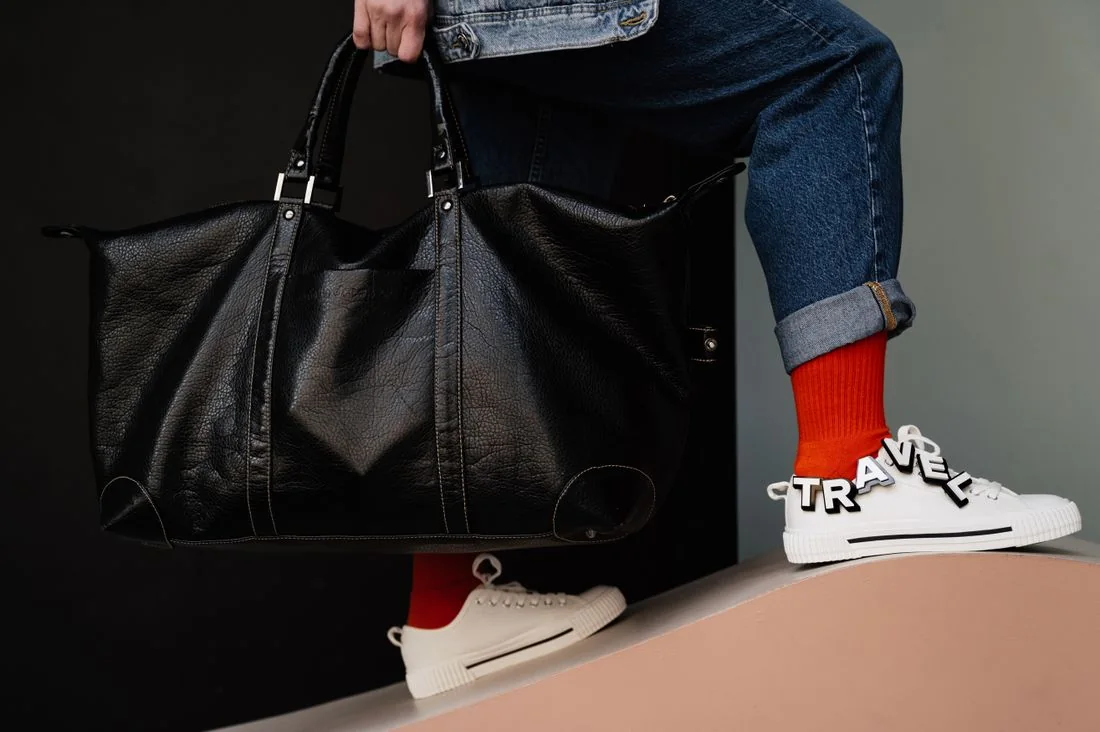
A duffel's end pocket is more useful when it has a clear purpose before packing begins. An extra compartment can otherwise become a place for objects that were never assigned a suitable home. Review its actual construction and the items you intend to carry rather than treating every available pocket as capacity that must be used.
Read the pocket's intended role
Consult the bag maker's information about the compartment, including any relevant load or care requirements. Do not infer waterproofing, insulation or protection from its position or lining appearance. A pocket advertised for one purpose should not be assumed suitable for every item that fits through the opening.
The weekender bag guide helps connect a duffel to the complete trip. End-pocket use is one practical detail within that choice, alongside the load, carrying method and the way the bag will be stored during travel.
Choose a specific category
Write a short contents label before packing: for example, the identified small accessories used together at the destination. Compare that proposed group with the maker’s intended pocket use. If the only description is “things left over,” pause and give each item a proper decision. A pocket with no useful role can stay empty; unused capacity does not need to become a miscellaneous category.
Avoid creating a permanent pocket category for unresolved decisions. A damaged item still needs appropriate attention, and an unfamiliar accessory still needs identification. Moving either into a zipped section does not make it ready for the journey.
Check the complete loaded shape
Load the pocket within its intended use and check what happens to the main compartment. Does the pocket press into space reserved for clothes? Does an object create a hard edge where the bag rests against you? Does its opening remain usable once the main section is packed? Judge the combined shape, not the pocket’s capacity on its own.
The packed-clothing retrieval guide offers related questions about access timing. An end pocket need not hold the first thing you will use if the actual trip makes another suitable location more manageable.
Plan the pocket's emptying point
Decide when its contents will be reviewed during the stay and after the journey. Keep products requiring care distinguishable from items ready for ordinary storage. Follow the bag's own instructions when dealing with marks, moisture or a problem with the closure instead of assuming the compartment can be cleaned like another bag you own.
Check the end pocket before the duffel is put away, including small internal areas provided by its design. If the same unused objects keep returning from trips, reconsider whether they need to travel. If the category proved useful, record the actual items rather than a vague label such as essentials. A purposeful pocket improves the bag's organisation through a clear role, not through the number of small things it can hide.


