
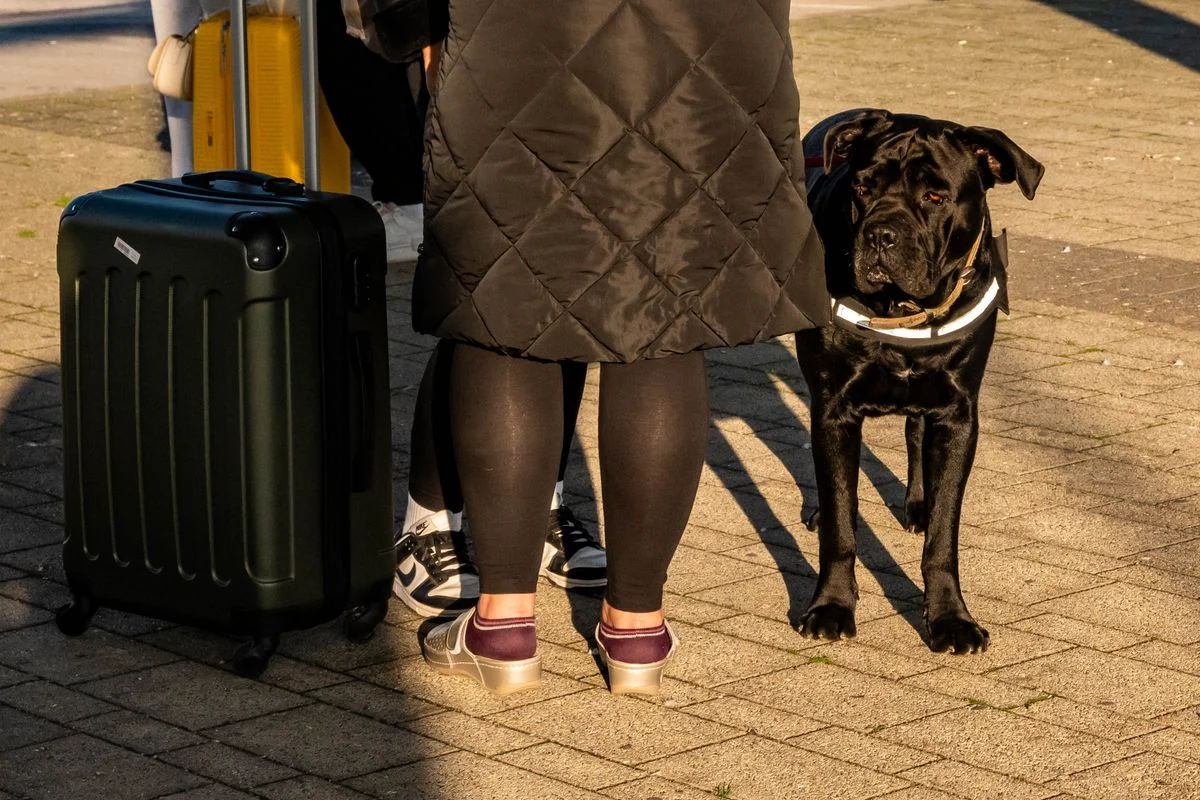
Travelling with a dog adds a moving companion to the luggage handover. At an accommodation entrance, one person may be checking in while another manages the lead and cases. Decide who holds what before reaching the doorway so that neither the dog nor the belongings become an afterthought.
Confirm the actual arrangements
Check the transport provider's and accommodation's current animal policies before making commitments. Permission, required documents, equipment and access arrangements can vary. Use the relevant official information and seek qualified advice where appropriate for the dog's needs. A general packing routine cannot establish that a particular journey is suitable.
Ask the property where arrival and check-in should take place with the dog. A pet-friendly label does not describe every entrance, waiting area or room route. Keep the confirmed information with the booking record so that arrival does not depend on explaining an assumed arrangement to whichever staff member is present.
Allocate the handover roles
If two adults are travelling, agree who remains responsible for the dog during check-in and who manages documents and luggage. The roles can change at a clear pause, but avoid transferring everything at once in the doorway. Each person should understand when the handover has actually occurred.
A solo traveller needs an arrangement that works without expecting a stranger to hold the lead or cases. Ask about assistance the provider can genuinely offer and plan the load accordingly. The backpack-versus-spinner guide can help assess the hardest part of the route, including the practical arrival rather than only the train or flight.
Keep essential items reachable
Put the dog's necessary travel items in an appropriate accessible container, separate from possessions that can remain stored. Follow professional and product guidance for food, water, medication and equipment where applicable. Avoid packing essential belongings in a case that will be handed away before you know when it can be retrieved.
Keep human documents and contact information equally organised. The luggage identification guide explains how a case needs a useful identification arrangement of its own. Do not rely on the dog's equipment to identify or secure the luggage, or attach the lead to a case as a substitute for proper control.
Settle in through a clear route
Follow the property's instructions on entering the room and using shared areas. Keep bags from blocking circulation and place belongings where they do not create a tangle with the lead. Allow the arrival process to be ordinary and unhurried rather than immediately trying to unpack the full wardrobe.
What if the agreed arrangement is unavailable? Pause and speak with the provider about a suitable alternative before proceeding. The useful preparation is a confirmed plan and a manageable load, with flexibility for the dog's individual needs. It is not a guarantee that every venue or transport service can accommodate the same routine.


